



Herbal Nomad: Understanding Skin Needs in Different Climates
What this year travel taught me about my own skin —
and why I never stop chasing local herbal knowledge
wherever I land
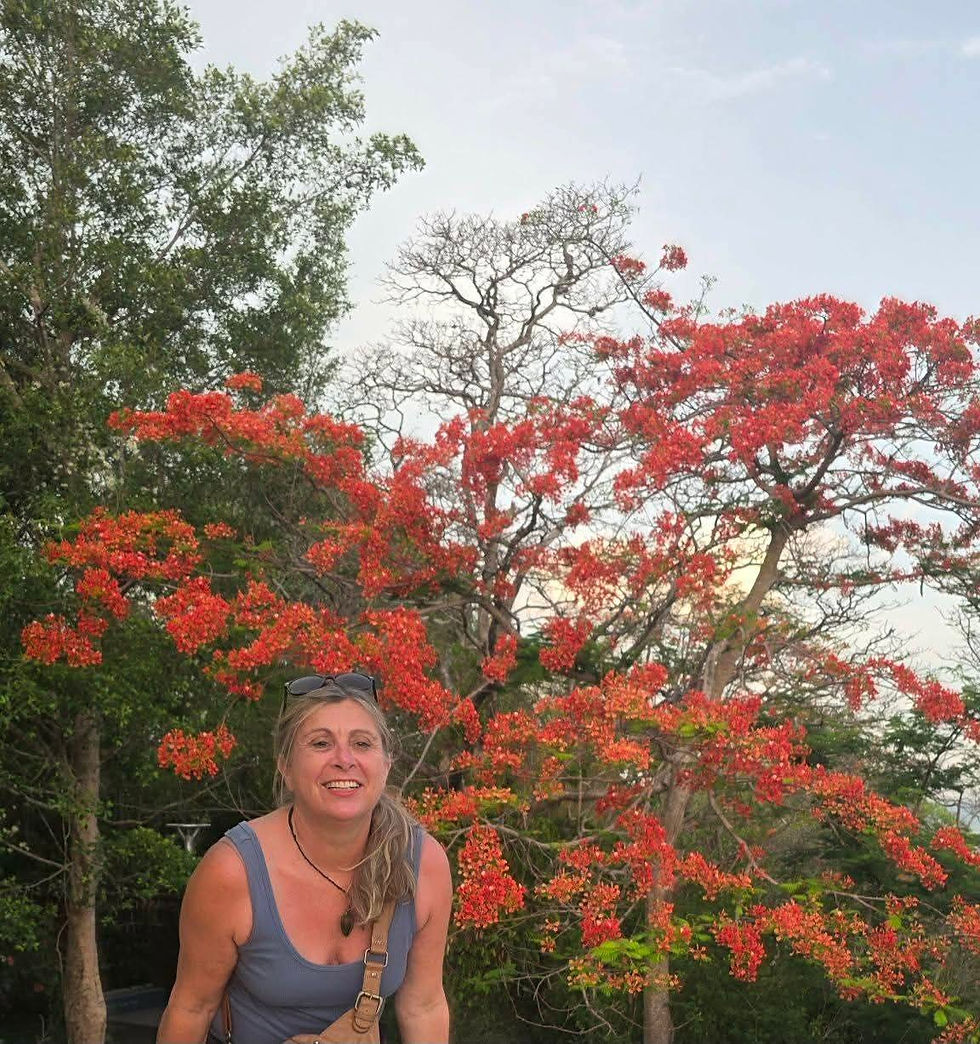
One of the quiet pleasures of travel, for me, has never been the sights alone. Wherever I go, I find myself
drawn to what grows there, and to the people who've spent generations learning what to do with it. A
market stallholder who knows exactly which leaf soothes a sunburn, an apothecary shelf lined with
tinctures that have nothing to do with what's trending, a grower who can tell you the difference a single
valley makes to an essential oil. That curiosity is really deeply rooted in to Sanflora Wellbeing.
This year, I left a Queenstown winter behind, spent time in Thailand's thick humidity, and then moved through a run of European countries — Switzerland, Italy, France, and Spain — in a summer that turned out hotter and drier than I expected. Along the way, I started paying much closer attention to something I'd always noticed but never properly studied: how completely differently my own skin behaves depending on where in the world it is. This is that story.
Leaving Queenstown Winter

I know Queenstown winter well by now, and I understand what's happening underneath the tightness of my skin I feel every time. It comes down to two separate problems wearing the same disguise. The first is moisture: cold air simply holds less water than warm air, and it pulls moisture straight out of the skin rather than the other way round. That's the tight, thirsty feeling that has nothing to do with imagination and everything to do with the air itself. The second is lipids — the skin's own fats, the ones holding its barrier together, get depleted alongside the moisture loss. That's why winter skin doesn't just feel dry, it can flake, redden, and itch. Two problems I fix with a hydrating tonic first, to put moisture back and give the skin something to hold onto; a rich night cream next, to replace the fats the cold had taken; and an oil-based serum last, sealing everything in rather than trying to do the work itself. It's a routine I've relied on for years. And it set up the question of this trip: what happens when that exact same skin, carrying that exact same need for richness, lands somewhere entirely different a few weeks later?
Thailand: Learning to Use Less

The answer arrived almost immediately. Within days of landing in Thailand, my skin felt different in a way
that had nothing to do with the tight, hungry feeling I'd just left behind — softer, plumper, but shinier than it ever gets at home. I've felt this on every trip to Thailand over the years, and always just accepted it as "tropical skin." This time, I wanted to actually understand the science behind it. In a humid climate, the air is already holding so much water that sweat struggles to evaporate off the skin —so a rich cream that sinks in beautifully in a dry winter just sits on top in that kind of heat, trapping sweat, oil, and warmth underneath. Heavier isn't better here. It can actively work against you. That means retiring my usual lotion for this leg entirely and reaching for something lighter — a cooling, water based mist with cucumber and aloe became the everyday step doing the real work.
And when it came to treating rather than just hydrating, I do something that might feel contraproductive: using a facial oil on skin that already felt oily. However, my Rose Facial Oil contains Jojoba oil, which isn't really an oil at all but a liquid wax so
structurally close to our own sebum that it can help signal overactive glands to ease off production, rather
than adding to the problem. A few drops, applied sparingly, did more than a full moisturising step ever
could. And there's a genuinely interesting piece of dermatology behind why skin in sun-rich, humid
climates like this often seems to hold a smoother look for longer: higher natural melanin levels give real,
measurable protection against sun damage, one of the biggest drivers of visible ageing, so the fine lines
that come from years of UV exposure tend to show up later. It's not a myth. It's biology, and it's a nice
reminder that there's no single "right" way skin is supposed to age.
Beyond that, I spent time chasing the kind of local knowledge I always look for when I
travel — looking into the herbal medicine traditions that have shaped how Thai botanicals are used for generations. And research the Essential Oils that are grown and used locally. Jasmine, Frangipani, Lemongrass - yamm, so beautiful...
Switzerland, Italy, France, Spain: A Different Kind of Heat
By the time I reached Europe, I expected a warm summer. What I found, across Switzerland, Italy,
France, and Spain, was heat that was even hotter than Thailand had been — which even for a European
summer is unusual. But the more striking difference wasn't the temperature. It was the kind of heat. Dry
instead of humid, and my skin knew it within days: tight, a little shedding on my body, hair drier than I
remember it being in a long time. Humid heat and dry heat both register as "hot," but
skin experiences them through completely different.

In humidity, water leaves the skin slowly, and the body has time to keep up. In dry heat,
water evaporates off the skin quickly, faster than it can be replaced — which is exactly the tight, thirsty,
shedding sensation I'd been feeling. Same sun, same general season, an entirely different physiological
story than Thailand. The real treat of this leg was how much my mists carried me through — Lavender, Neroli, and Rose in particular. They're cooling and soothing on sunexposed skin, which was exactly what I needed, but there's a nervoussystem side to them too. Their properties and scents just make you feel wonderful, easing stress and offer joy immediately. It's "just" a Hydrosol enriched with Essential Oils, 100% natural and nothing fancy, but truly wonderful.
I kept one small ritual through the whole leg: a gentle face scrub, once a week, always in the evening and
never right before or after time in the sun. For daily care, I stripped things right back — a mist, then a light day lotion, nothing heavier. Both my Rose and Manuka Honey day lotions carry antioxidants that help offset some of the oxidative stress that sun exposure puts on skin, without ever feeling like "more" on top of skin already coping with heat.
The Same Skin, Different Needs
Looking back across the journey — a tight, thirsty Queenstown winter, a soft and oily Thai humidity, and
then a dry, sun-heavy stretch across four European countries — I'm understandy how differently the same
skin asked to be cared for in each place. Not because my skin is unusually complicated, but because skin, in general, is always responding to where it actually is. There's no single correct routine, only the right one for your skin and the climate you're standing in. It's all about a little self-care and paying attention our body, mind and soul need.
What's Next
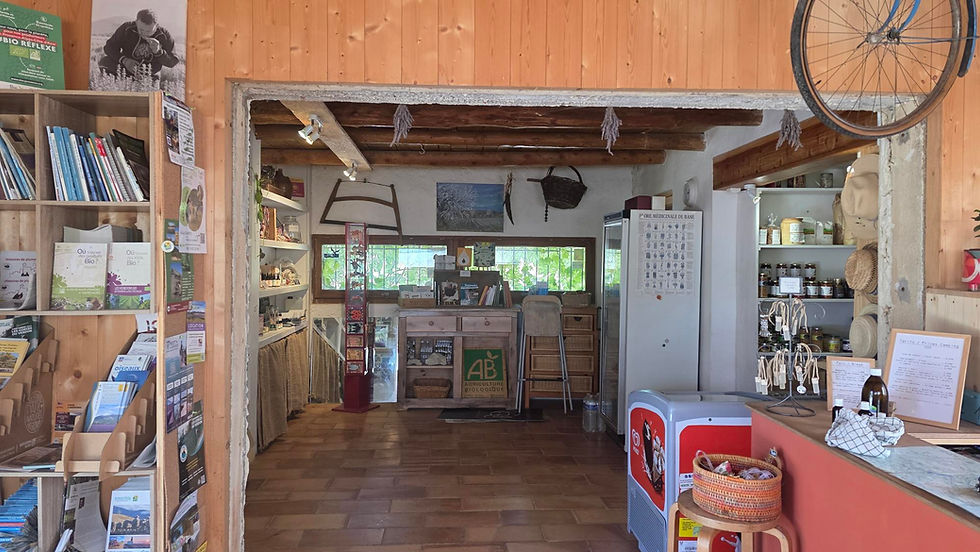
This isn't quite the end of the story. I want to properly share what I learned tracking down growers, distillers, and traditional herbal knowledge on this journey— the part of this trip that had nothing to do with my own skincare routine and everything to do with why I formulate the way I do. And after that, it's back to New Zealand just as our own summer market season begins — a very different, much more local kind of botanical research. Want to follow along as it happens? I share it all first over on Instagram and Facebook before it ever makes it here.
Stay well and moisturised, wherever you are. 🌿
Sandy


Comments